


From time to time the industry fires up in a heated jibber jabber filling Twitter with drama, hate and all-you-can-eat ranting. Usually the reason is that some site in need for page views “got in bed” with someone with a notion of HTML, a computer, a keyboard and a text stating something about SEO.

We then move to the stage where we all get offended and take all this kerfuffle in a personal way. Rinse and repeat…
Most Marketers like drama, gossip and conspiracy theories; we like to paint doomsday scenarios — Geddons! Geddons!… Bigger than Panda… Bigger than Penguin! Your imagination is the limit. But I believe what we like to do most is to predict and do guesswork correlating this and that in hopes we can later prove how right we were and how “everyone should really listen to me”. Yet most of us fail miserably when it comes to “coverassing”—I’m pretty sure I’ve just made up that word… Anyway.
Coverassing is what I like to call to the constant need to, well… Cover your ass! Specifically with regards to what you say to your clients and uninformed audience and, most importantly how you say it. When the going gets tough, good judgement should always prevail. And there should be no room for guesswork, sensationalism and drama.
When you assume, you make an ASS of U and ME
Most of the speculation in the SEO industry, ends up being consumed by uninformed people that assume stuff (you know ASS-U-ME). These folks then, try to transform all this misinformation into recipes, in an attempt to scale up effortlessly… The sad part is, most SEO advice needs to be specific and targeted to the business model. What works on experiments or for your competitor, might not work so well for you. And can even, sometimes, affect you in a negative way. That’s why most search engines give vague advice. They aren’t consultants of your business; they try to cater as many scenarios as they can. Not to mention, they know their advice will likely be interpreted and spun as a one-size-fits-all blanket statements, or sensationalistic headlines. It’s your job, as an SEO, to educate your client. Disambiguate and make that advice business-specific. If you don’t know how to do that, then you might want to consider studying some Marketing, Branding and Usability for example.
SEO professionals are often pushed to demonstrate knowledge over something they don’t control (organic results). And boy do we hate to admit we don’t know! That would, very likely, cause your client to question those rockstar hourly-fees he’s paying you. Sadly, more often than not, SEOs end up being seen and portrayed as the “magic trick makers” and “secret sauce holders”. And there’s no one else to blame but ourselves for being portrayed this way. We love taking isolated chunks of data and try to make it look like we reinvented the wheel. As if that were not enough, we then display it for everyone to see… Without proper warnings and disclaimers!
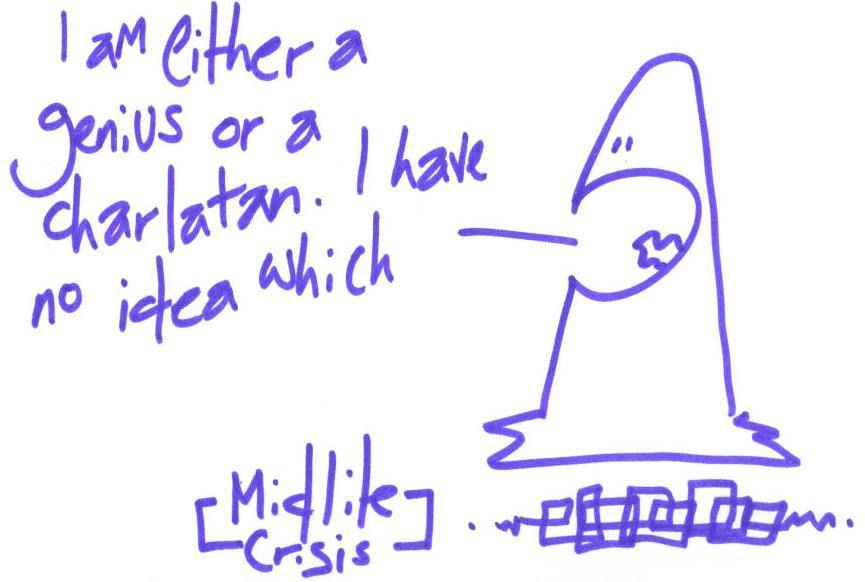
Dear SEO, are you a genius or a charlatan?
It’s fun to engage in guesswork and sensationalism, but all that should be left alone and locked away when you’re dealing with whomever pays for your services. Most well informed marketers, can do a good job separating fantasy from reality. If you don’t do due diligence and separate these two worlds, it will eat you alive before you even notice.
It may just be a matter of time, but eventually at some point, your client will ask you some dreaded question like: “How much impact are we going to see from the changes you’re proposing?”; or “How much more money are we going to make if we jump to the number one result?”… Something along these lines. It’s at this time, that we see either the real knowledge, or the real ignorance of a professional coming to life. I’ve lost count of how many times I stood in meetings with clients, where another consultant involved usually spits out something completely false, based on misinformation and shortsighted guesswork they read somewhere. This usually happens because of two things:
Professionals fail to understand the logics of Internet Marketing and search engines, and how these two pieces fit together;
They can’t stand not standing out, or they want to be perceived as geniuses that “everyone should really listen to”.
The majority of answers to these kinds of questions, often come in the form of some basic linear calculations — which obviously is a wrong approach. Thinking that, for example, conversions correlate in a linear way with your position in search results, or even with CTR, is something you don’t want to do. There are simply too many “IF”s involved.
Keep the SEO buzzwords to yourself
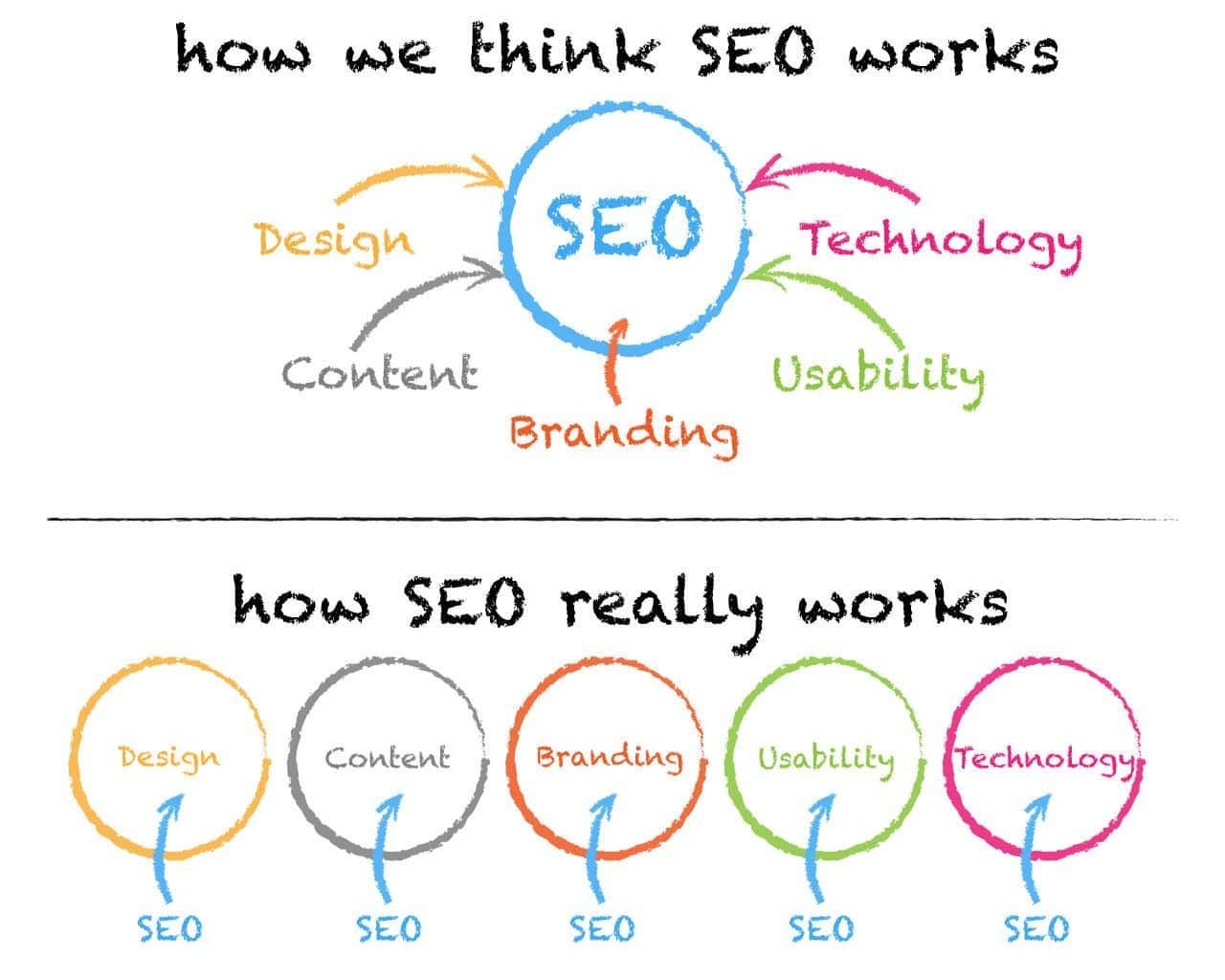
I’m gonna tell you a secret: your clients don’t really care about fuzzy buzzwords like “link juice”, “penguin update”, “short clicks”, “correlations” and whatever more lingo you have to throw at them. They just want you to make it sound like a logic thing to do for their growth and business plan. When talking with clients, leave the sophisticated lingo locked away in the playground. Unless, of course, your client digs this kind of stuff. Nevertheless, always make sure he or she understands what’s being discussed. If you come out trumpeting that they should work SEO like an isolated piece of the whole Marketing strategy, chanting stuff like “Content for SEO”, “links for SEO” and “[insert your tactic] for SEO”, then you should be wearing a pair of wellies and a shovel. Not trying to help a business grow. Technicalities aside, SEO is supposed to work inside all other Marketing departments. Not the other way around.
It’s not easy to make clients understand how complicated is to predict impact in SEO. To recommend tactics, or to design a strategy. Usually, when someone asks me questions like “How much impact are we going to see from the changes you’re proposing?”, I tend to ask them back “If you do a diet, how much weight will you lose?”.
SEOs can give direction. They can’t control the end result
SEO is very much like a Nutritionist’s job: on one side you have a site (your body); on the other side you have a search engine (your metabolism). Now, you have to factor in all the the good practices you know, and what to avoid (diet advice). But, it’s almost impossible to know exactly what the outcome will be. You have a notion about how search engines (metabolism) will react to the changes (what you eat), but you can’t guarantee it, since you don’t control one of the ends. Ultimately, you know what’s good and what’s bad. Using common sense, you will decide what to avoid eating and what to eat safely. But you can’t make decisions relying purely on isolated chunks of data, superficial analysis and guesswork.
There’s only so much you can achieve by sticking strictly to technical SEO, chasing algorithms and correlations. When you ignore the potential of a holistic approach, you’re leaving most of the potential on the table.