


Most people (read: marketers) talk and write about things they don’t deeply understand. Just days after Bloomberg broke the news that Google was not only launching RankBrain but had already been using it in search for some time, digital marketers, SEOs and “experts” had already published opinion pieces demonstrating how much they understood about the subject. Few, however, attempted to form logical opinions or even make sense of what they published. Almost nobody mentioned that machine learning and artificial intelligence aren’t new to search engines. And even less so in technology generally… These areas have been explored for decades.
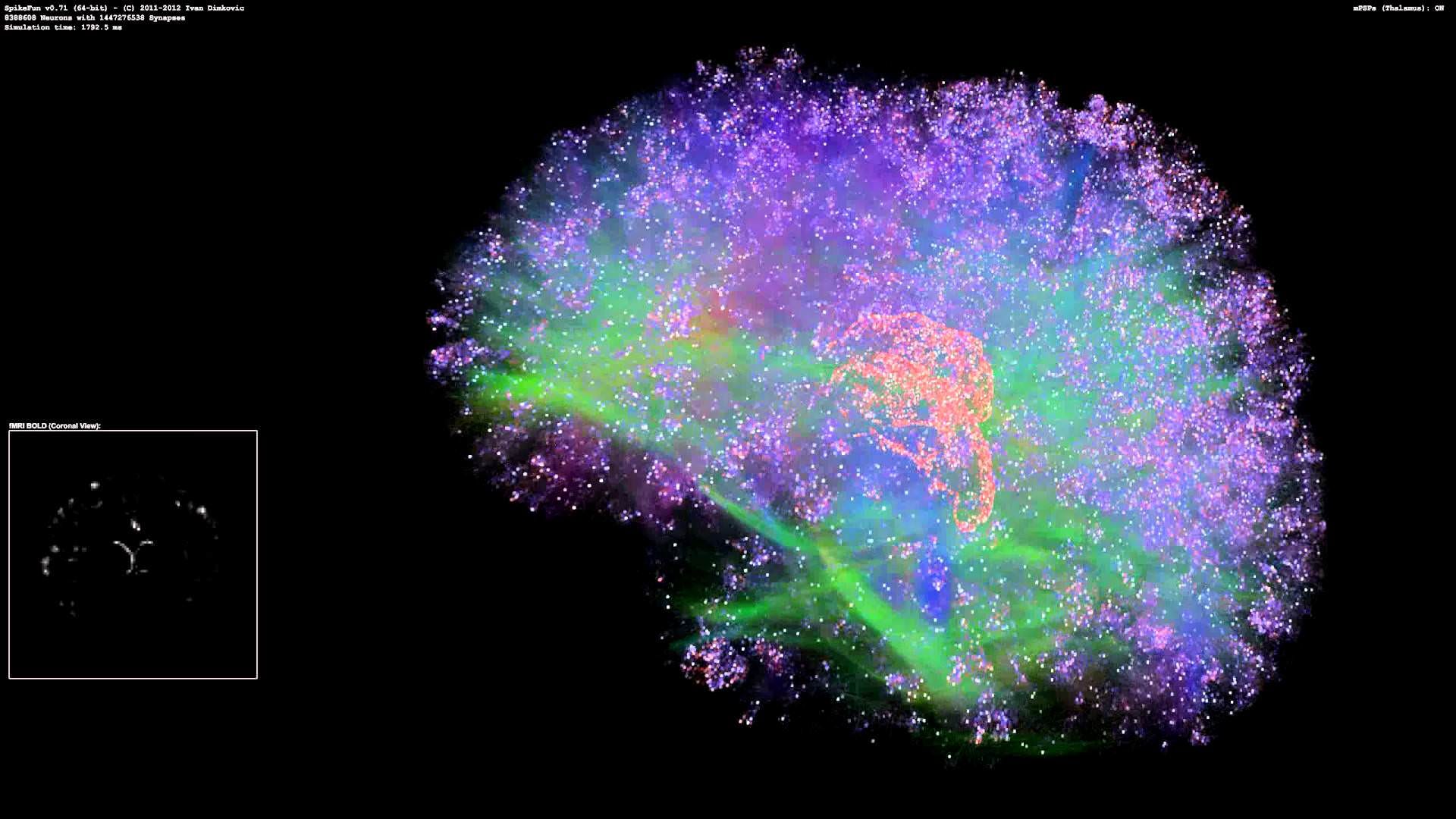
At Google, the first steps with machine learning began at least when Google started fighting spam in 2002. We saw the first, more emphatic signs of something more evolved when Google released its behavioural and quality analysis algorithm, Panda. But the use of technologies that reduce dependence on factors that are easy to manipulate has practically always been an ambition of all search engines.
What is RankBrain?
RankBrain is a form of artificial intelligence that Google is using to serve better search results and answers to its users. The need arose due to the introduction of different search habits and methods—voice search, for instance, makes many queries more difficult for a machine to interpret.
In 2007, Google had already mentioned the diversity and complexity involved in interpreting user searches. Udi Manber revealed at the time that between 20-25% of daily searches were entirely new. Currently, according to public statements, that number is somewhat lower (around 15%). However, considering that mobile search volume has increased considerably—even surpassing desktop search—we need to consider what might have contributed to this percentage decrease. My bet is on two strong characteristics of mobile search:
A higher volume of shorter searches — when on a mobile device, people don’t type as many words, resulting in more head-term queries
Voice search — which massively diversifies a smaller quantity of searches, though it’s a growing trend
We’re also starting to notice another habit that will influence these statistics: searches made through automatic features like contextual assistance on mobile devices.
What is Artificial Intelligence and Machine Learning?
This is where almost everyone who wrote about the subject gets lost. I’ve read things like “[…] machine learning is a type of artificial intelligence […]” — Sorry, what? Artificial intelligence is a scientific field and machine learning is a methodology. The scientific field uses the methodology to evolve. That is, AI uses ML as one of the means to learn and evolve.
As I mentioned above, in Google’s case, machine learning methodologies have been used (at least) since 2002 for different purposes. Currently, with RankBrain, it’s being used more extensively to learn to make connections between word vectors.
The complexity of the vocabulary we use to express ourselves is immense. In some languages more than others, but generally, interpreting search intent is far more difficult than interpreting words. Word vectors are important for machines to interpret, with a smaller margin of error, the different intentions and meanings that derive from different word associations. Consider that an association between two or more words can have countless meanings… And we’re not even considering more complicated things, like intonation.
For those who remember Hummingbird (an infrastructure improvement Google made in 2013), it served as the foundation that allowed Google to bring RankBrain to us. Just as Caffeine in 2010 enabled Google to achieve improvements in indexing speed.
Has RankBrain already launched? Has it reached us yet?
RankBrain was launched before it was announced. Google disclosed that it was gradually rolled out in early 2015. Currently, all Google improvements are launched internationally. The habit of thinking “this will only reach [my country] in X years” is a distorted perception of reality.
How do I do SEO for RankBrain?
If you understood everything I’ve written so far, you’ll arrive at the simple conclusion without much effort: it doesn’t make sense.
Google mentioned that RankBrain is among the most important factors for ranking results. However, this importance appears precisely because it’s an algorithmic improvement that’s practically impossible to manipulate. This is because RankBrain acts as a modifier, not as a base algorithm. There isn’t even a predefined condition for when it should act. Modifier algorithms come in at the final phase, before serving results to users. And they’re not static. They adapt to the type of search made, as well as to the multiple implicit or external factors that can influence a search.
So, if you’ve read or heard someone explain how to “optimise for RankBrain,” congratulations—you’ve identified a charlatan.
Consider that nowadays, search methods and habits have changed. Google is no longer just a search box that returns ten blue links. Just as search habits have evolved, search engines try to keep pace and force professionals to evolve… Well, at least some of them.
As mentioned above, RankBrain emerged due to the need to accommodate new search habits and improve search results. The devices largely responsible for changing users’ search habits are mobile devices and the omnipresence of the internet in people’s daily lives.
Previously, the information sources that search engines had about their users only allowed them to understand isolated data points—like search history and unreliable IP addresses. Today, the amount of information implicit in a search using a smartphone is immense. It’s no coincidence that search engines say mobile is made of moments. The moment you’re waiting on the street and search for something is different from the moment you’re in front of the TV and search for the same thing. Which is also different from the moment you’re in the bathroom and search. Today, devices can digitise and provide implicit data like precise geolocation and location history, time of day, speed, temperature, search habits, among others.
How does RankBrain impact the future of search?
If you’ve attended one of my talks, or discussed anything related to the future of Google and search with me, you’ve probably heard me cite Google’s mission:
Organise the world’s information and make it universally accessible and useful.
Note that the phrase mentions “the world’s information” and not “the internet’s information.” Google aims to bring all information, offline and online, to your fingertips. To be your personal assistant.
Users are predisposed to provide some type of information. However, both the quantity and sensitivity of that information requires that something advantageous and convenient be offered in return. The value of the information we’re willing to give up varies proportionally with the perceived value or convenience of the service provided in exchange.
If Google can be more intelligent and make our lives easier in every moment of the day, we’ll be far more predisposed to share details of our preferences so that information can be organised—maximising our wellbeing.
Will the world belong to robots? Skynet? Apocalypse?
Currently, everything is still very much in a “let’s see” phase. Especially everything that’s made publicly available. It’s indisputable that all online services experimenting with chatbots, virtual reality, or augmented reality are on the same path or have similar or complementary ambitions. Google has simply been on this path for much longer and, as a result, has technology that’s far more developed and advanced than much of the competition.
I imagine that in the very near future you’ll be connected 100% of your time to an omnipresent personal assistant. Whether you’re walking down the street, travelling in your car, or just opening your fridge door. This personal assistant will recognise all the different moments, as well as all your needs, and try to meet them in the best way possible. For anyone who wants a basic idea of what I’m referring to, I recommend watching the film Her (2013).
Ultimately, among Google’s main objectives are three fundamental ones: inform, disintermediate, and be your personal assistant.